Charlotte Bradford vs. Louisa May Alcott

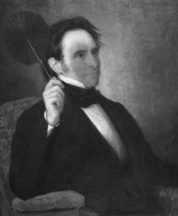
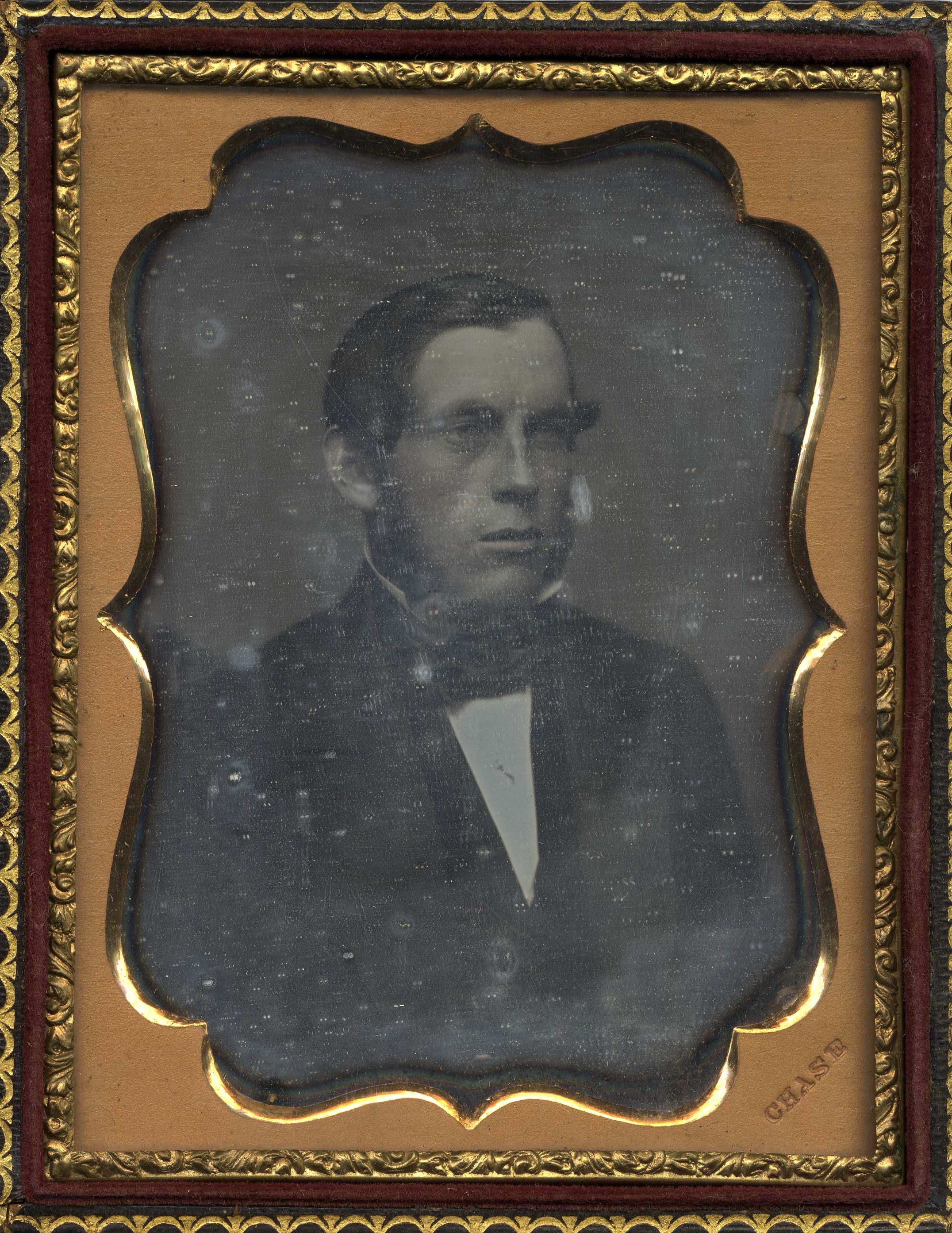
Charlotte Bradford (1813-1890)

Carolyn Ravenscroft, Archivist

During the Civil War Charlotte Bradford of Duxbury traveled to the South to become a nurse.  She worked for a time aboard the Transport Ships (“Floating Hospitals”) organized by the United States Sanitary Commission and later worked in Washington, D.C. area hospitals under Dorothea Dix.  During her tenure as a nurse she kept a daily journal and wrote numerous letters home.

One of her most interesting letters is to the Editors of The Commonwealth (c. 1863), a Massachusetts newspaper.  In it she describes her feelings toward Louisa May Alcott’s recently published serial, “Hospital Sketches.”  Charlotte was none too pleased with Alcott’s description of life in a Union Hospital.

What is particularly interesting about this critique is the fact that Charlotte most probably knew Miss Alcott, or at least of her.  One of Charlotte’s cousins was the Transcendentalist, George Partridge Bradford, who was a great friend of Broson Alcott.  Her other cousin was Sarah Alden Bradford Ripley, the owner of the Old Manse in Concord and Alcott neighbor.  Perhaps Charlotte did not know that Tribulation Periwinkle, Louisa’s pseudonym in Hospital Sketches, was actually Alcott.

The copy of the letter in the Drew Archival Library is incomplete.  There is at least one page missing.  I have not verified if the letter was actually sent or whether the Editor’s chose to publish it.  Charlotte’s description her hospital work, soldiers and diet is a bit different from what we read in her diary.  Although she claims to have a good appetite in her letter, it was, in fact, not very good.  She was a vegetarian and dispised the Army rations she was forced to eat.  She also came up against surgeons on more than one occassion and was dismissed from the Armory Square Hospital for insubordination.  Her time in Washington was difficult and often times far from the rosy description she gives to the Editors. Despite her own tribulations, however, Charlotte obviously did not like anyone anyone speaking ill of the conditions publicly.

The following is Charlotte’s copy or rough draft of her letter to The Commonwealth.

Mr. Editor,

Your paper of the 19th was handed me today and it is so seldom that I see one from Mass. that I greeted it as a friend from home.  “Hospital Sketches” on the first page caught my eye, but I read it with no little pain and was tempted to give you a sum of my own experiences, it has been so different from the feeling expressed there.  I have been a nurse in hospitals in and near Washington for nearly a year and have heard much said about self denial and sacrifice, but I have had no sympathy with that at all.  My motives for coming and here were not, I am sorry to say, of the self denying sort.  I had no great idea of the good that I could do for I have no doubt there is many a woman at the North who would be glad of the privildge of coming who could do more and better than I can.  I came simply from the love of taking care of the sick and my interest in the war and so perhaps was better prepared to offer [?].  I must say that I cannot recall a year of my life that I have passed more pleasantly.  It is not, I think, that I have ben favored in the choice of hospitals for I have served in six different ones, including some of the worst as well as the best.  I have eaten off tin plates nothing but army rations and sometimes without a knife or fork but what of that?  I fared the same as the soldier and preferred that to partaking of the nicer victuals from the surgeon’s and stewards tables.  But I am blessed with a good appetite and it was rather and amusement and difficult to realize that I was sitting in the cellar of the Capital eating off an unwashed table or eating in this primitive style in its magnificent rooms above stairs.  Let no one criticize even that hospital too severely.  It was a temporary one in a building entirely unsuited to the purpose excepting in its fine and spacious rooms for the beds, but when it comes to perparing food for 1000 men best no one find fault untill he has been behind the scenes and seen what it invovles.  A hospital is a vast machine that requires a great many springs to be put in motion before it works evenly and smoothly.  In Armory Square Hospital which Miss seems to consider a model I have not a year since had the better part of many a meal from not going a the first sound of the bugle. I have eaten after the surgeons as well as before an found how essential it was to my comfort that they should be punctual at their meals.  A word in regard to the bread.  I know that the aeratated bread is used somewhat and that, when a day or two old is certainly much like sawdust but the army bread that we get in Washington is certainly excellent and superior to most homemade bread.  But what are such petty annoyances to one who has the priviledge of going into a ward in the morning and meeting the smile of welcome that greets her.  I have always heard it said that men did not know how to be sick, had no patience, but I was soon convinced of the fallacy of that doctrine.  I never saw such patience and fortitude as shown by our soldiers indeed the cheerfulness and even fine spirits of the soldier is almost proverbial.  I have in my mind’s eye a young man who had lost altogether the use of his lower limbs, could not even sit up in bed, but as he lay on his back or leaned on his elbow, his face was radiant with smiles.  I at first thought he must have heard some pleasant news.  I shall never see him again but if ever I am sick and inclined to be impatient I believe that face will be a lesson to me.  Then how pleasant to go round with the dressing tray and as one after another receives the refreshment of clean water and bandage to watch from day to day the gradual healing of the wound and listen to their kindly, pleasant talk for they are all your friends.  The sorrow is  that of the hundreds that I have watched and tended I shall probably never see ten again but I have met some curious instances showing that the smallest act of kindess is appreciated.  A young man came one day and spoke to me whom I did not recognize “you may perhaps remember” said he “I am the one whom you gave 2 soda crackers one day ’cause I could not eat my dinner.”  And let me say that though I do not doubt there is a great profanity in the Army yet in hospital I have rarely, except in delirium, heard a soldier utter an oath and in these few instances it was always followed by “I beg your pardon I did not know you were there” showing the respect of our people for women.  I must not forget the pleasant though sadder task of administering to the wants of the sick.  To bathe the aching head and moisten the fevered lips or even to speak a kind word are trifles but they are a solace to the weary, worn out soldier.  I have seen the tears glisten in more than on manly eye…

Charlotte Bradford’s diaries and letters are part of the Bradford Family Collection.  She lived her entire life, other than her three years in Washington, DC, in her family’s home on Tremont Street (The Gershom Bradord House).

Duxbury & The Old Manse

The Old Manse

Carolyn Ravenscroft, Archivist

Today I was fortunate enough to spend the day in Concord touring some of my favorite places – The Old Manse, Orchard House and Sleepy Hollow Cemetery.  For those of you who don’t know, Duxbury has a strong connection to Concord and the Transcendentalists.  Sarah Alden Bradford Ripley, the one-time owner and resident of the Old Manse (and landlord of Nathaniel Hawthorne) was the daughter of Gamaliel Bradford and niece of Gershom Bradford.  Gamaiel and Gershom were married to sisters (Elizabeth and Sarah Hickling) making their children 1st cousins twice over.  Our Bradford Family Collection contains correspondence between these cousins.

Gamaliel Bradford built the beautiful yellow federal-style home on Tremont Street and his brother, Gershom, built his more modest home directly across the street (the Gershom Bradford House is currently owned by the Duxbury Rural and Historical Society).  As a girl, Sarah Alden Bradford Ripley lived right here in Duxbury. When Gamaliel and his family moved to Boston, the cousins continued to visit each other throughout their lives.

If you have never been to the Old Manse, it is certainly worth the trip.  I would also urge you to visit the Gershom Bradford House to see another chapter in this amazing woman’s life.

WWI Items on Display

Uniforms worn by Capt. Robinson Murray and Margaret Piersol Murray

You may have missed our WWI Letter Reading but it is not too late to see the many wonderful artifacts, uniforms and posters on display.  All four of our exhibit cases are full of artifacts generously loaned from the private collection of Bryan Felty.  Also on display are the Red Cross Nurse’s uniform worn by Margaret Piersol Murray and the Captain’s uniform worn by Robinson Murray during their tenure in France in 1918.  These items will remain on display until early June.

Also, look for an online exhibit of our letter reading coming soon.

WWI through a girl’s eyes.

In preparing for our upcoming WWI Letter Reading I took a closer look at a diary we have at the Drew Archives.  It is a small blue day book that once belonged to a Duxbury summer resident, Eleanor Stearns Young, in 1916 .  Fourteen year old Eleanor was a faithful diarist for the first quarter of the year, recording her skating and sledding adventures with her best friend, Phyllis Winch Twombly (Phy); her crush on Atherton (Atty); her “peach of  dress” and her desire for a “tin lizzy.”  But peppered throughout her tales of sunny winter days are hints of a sadder, darker world.  Her diary gives us a sense of what it was like to be a young adult during the tumultuous days of WWI.  Below are a few examples of her entries:

Wednesday, January 12, 1916

Going to Chin-Chin.  Good bye.  Went, had a simply corking time.  Montgomery & Stone were corking.  They had a clown band.  Simply great.  Grandma enjoyed it greatly.  Vera still presists in teasing me.  Father has a cold.  He gave me a ten dollar gold piece. I have got 152 dollars in the bank.  When I put this in I will have $172.  Gosh I am sure some rich kid.  Be able to buy a tin lizzy soon.  Mother is going to Mrs. T’s for a dinner next Wednesday.  Phy is coming over here.  My dress is getting on.

Thursday February 3, 1916

Damn those Germans.  The last raid in England they killed almost one hundred people.  Mostly women and children.  They are planning a new offensive to take Dunkirk and Calais.  They won’t get it though.  Phy to supper.  Got a little cold.  Went to bed early.  Gee, I could smash those Germans.

Monday, February. 21, 1916

10 below this morning.  Great fun riding lying down.  Awful cold. K. and G went too.  Just three of us.  Coasted all the afternoon.  Slept like a top.  The Germans on West Front capturing a few trenches.  Nothing new.

Friday, February. 25, 1916

Grandmother home from New York.  Brought me a red Chinese wrapper.  Great.  Went to school. Bad day.  Phy came to supper. Dressed in costume I am going to wear tomorrow night.  Germans are still giving it.  Kaiser is sending them on to slaughter like pigs.

Wednesday, March 1, 1916

Verdun attack calmed down a little.  Went to school.  Phy has bought of some of her spring clothes.  One of her hats looks awfully well on me.  Striped skirts are all in style.  Am going to have one suit.  Just wait til I get speeded up.

Friday, March 3, 1916

Germans on fresh drive for Verdun.  Oh well.  I guess we are very sure of a few things wave.  Katie came. I am having five white shirts made over from mother’s. Such is life.  I must be getting fat

Tuesday, June 6, 1916

Birthday

I am fifteen years old.  Lord Kitchener dead. He was on his way to Russia. The ship was torpedoed in the North Sea.  I am afraid this is a very disheartening thing to happen.  I never felt this sort of thing but I do now.  It seems so awfully queer.  There seems to be a black shadow always behind one.  The President of China is dead also.  This is an awful world. 

Shopped all the morning.  I got thirty dollars from Gram and Gramp.”

Eleanor’s diary does not continue after a few entries in early June.  Perhaps she left her diary her Brookline home when she packed for her summer house on Harrison Street.   Perhaps it became lost or she simply lost interest.  Whatever the reason, we are glad she wrote her mind for at least a few short months in 1916.

To hear Eleanor’s words come alive or hear other WWI letters, join us in the Wright Building on May 20, 2010 at 7pm.  The even its free of charge and, as always, refreshments will be served.  See you there!

Four Generations of Duxbury Women

Four Generations of Duxbury Women

Four Generations of Duxbury Women, c. 1850

It is not often you come across a daguerrotype depicting four generations.  This one is especially fine considering the importance of the women photographed.

Starting on the right, we have Judith Winsor Hathaway (1778-1881).  The story goes that Judith was such a lovely young woman that the painter/doctor, Rufus Hathaway, fell in love with her at first sight.  Next to Judith is her daughter, Polly Hathaway McLauthlin (1796-1879).  Polly was married to Lewis McLauthlin, the groundskeeper of Ezra “King Caesar” Weston’s estate.  Next is Judith Winsor McLauthlin Smith (1821-1921). She was married to shipbuilder, Sylvanus Smith.  Judith was active in political and social causes throughout her life.  She was an abolitionist and a suffragette.  In 1920, at the age of 100, she was able to cast her first vote.  Finally, on the left we have Frances Smith (1849-1916).  Like her mother, Frances was a reformer and spent her life working in Boston as a social worker and for many charitable organizations.

The photograph is from the Smith McLauthlin Collection.

The Peleg Sprague Papers

What it lacks in size, it more than makes up for in content.  The Peleg Sprague Papers have been cataloged and are now open to the public.  The collection consists of correspondence from some of the most important “movers and shakers” of antebellum America – Henry Clay, Daniel Webster, Edward Everett and Rufus Choate.  Also included is a remarkable letter written by a very young Henry Wadsorth Longfellow while he was a student at Bowdoin College.

Peleg Sprague (April 27, 1793 – October 13, 1880) was an American politician and U.S. Federal judge.  He was born in Duxbury, MA to Seth Sprague and Deborah Sampson.  After graduating from Harvard in 1812, Sprague studied law in Conneticut and was admitted to the bar.  He practiced law in Maine before becoming involved in politics.

Sprague served in the Maine House of Representatives from 1821-1822.  In 1823 he was elected to the U.S. House of Representatives from Maine’s Fourth Congressional District (1824-1829).  He then was elected to the U.S. Senate (1829-1835).  In 1835 he resigned from the Senate and practiced law in Boston from 1836-1841.  In 1840 he was a presidential elector for the Whig party.

In 1841 Sprague became a Judge for the United States District Court for the District of Massachusetts.  Due to his failing eyesight, he retired from the bench in 1865.

Peleg Sprague married Sarah Deming in 1818.  Together they had four children: Charles, Seth, Sarah, and Francis.  He died in Boston in 1880 and is buried in Mount Auburn Cemetery, Cambridge, MA.

For a complete item list of the Collection, click on the Peleg Sprague Papers in the menu bar on the right.

Amasa Delano and Benito Cereno

Amasa Delano is one of Duxbury’s most famous historical figures.  Born in 1763 to Samuel Delano, Sr. and Abigail Drew, Amasa would spent most of his life as a master mariner, circumnavigating the globe three times.

In 1817 Amasa Delano published the account of his voyages in A Narrative of Voyages and Travels in the Northern and Southern Hemispheres: Comprising Three Voyages Round the World; Together with a Voyage of Survey and Discovery in the Pacific Ocean and Oriental Islands. While a terrific read, this book is most famous for being the inspiration for Herman Melville’s “Benito Cereno.”  The most recent scholarly work on this episode is Seeing Unseeing: The Historical Amasa Delano and his Voyages by Dr. Henry Hughes of Western Oregon University.

We are fortunate at the Drew Archival Library to have the Amasa and Samuel Delano Collection that includes fascinating letters written by Amasa during his time in the South Seas.

A Duxbury Family

Jonathan Smith, Jr.

Come to the Drew Archival Library this evening and hear history come alive. Letters will be read from the family of Captain Jonathan Smith, a master mariner from Duxbury, MA.  Jonathan and his wife Zilpha Drew lived in the stately home located at 18 St. George Street.  The home was later occupied by their daughter, Zilpha Smith, and her husband, Dr. James Wilde.

The letters read will include those of Capt. Smith to his wife while he was away at sea; the entertaining news of Jonathan Smith, Jr. to his brother; those of Zilpha Wilde to her sister-in-law, Judith Winsor Smith (1858) concerning the care of a sick child and Duxbury gossip; and the letters of Judith to her husband, Sylvanus Smith.

The Letter Reading will be at 7p.m. at the Wright Building, 147 St. George Street, Duxbury.  Admission is free.

Smith Family Letter Reading

The Drew Archival Library will continue its Letter Reading series on Thursday, March 18th with letters from the Smith family of Duxbury. Capt. Jonathan Smith (1780-1843) and his family lived in the stately home located at 18 St. George Street. While away at sea the Captain wrote loving letters to his wife, Zilpha Drew Smith. His daughter, Zilpha Smith, continued to live in the home with her husband, the town’s doctor, James Wilde. Her letters to her sister-in-law, Judith, describe life in Duxbury in the 1850’s. Other letters will include those of Jonathan Smith, Jr. and Judith Winsor McLauthlin Smith.

A Letter for the Day

The Mid-Atlantic states may be reeling from a bout of cold, snowy weather but 194 years ago Capt. Jonathan Smith was experiencing similar conditions.   In the following letter, Capt. Smith writes home to his wife, Zilpha Drew Smith as he awaits cargo in Baltimore. 

Baltimore, February 17th, 1816

My Dear Wife,

I suppose that you will begin to look for a letter by the time you receive this, I have nothing new to write, the prospect for freight is small, we have not had any offer.  Today we have advertised the ship for Gibraltar.  Mr. Thompson says that he will put in 500 barrels of Flour, & we must put as much more if we can get the remainder on freight.  I expect to have a letter from Capt. Reuben [Drew] in 2 or 3 days & likewise one from Charles [Drew], then I shall conclude on something.  I have sold about 60 ton of plants at $11.50.  I suppose you would like to know how I spend my time, I go to town, which is about 1 mile in general about 9 am, & return about 12, & sometimes I take a trip up there in the afternoon.  The remainder of the time I spend on board of the ship.  The evening after supper which is about dark Mr. Chandler & Mr. Soul go or stroll off and I am left alone.  I have spent one evening at Mr. Ramsay’s, a ship chandler.  That is the only house I have been in.  Mr. Chandler has spent 2 evenings on board, the remainder I have been alone.  I sit by the stove as it has been very cold & read a little & think a little, and be assured that you and the boys have their share of my thoughts.  At 9 or a little before or after, I go to bed.  I thank kind Heaven that I enjoy good health, except I have rather a bad taste in my mouth. I expect that my stomach is rather foul.  It has been very cold.  The 14th and 15th it froze the harbor over, say 3 inches thick.  Last night the snow fell about 6 inches deep & at 8 this morning it commenced raining and has rained very hard all of the fore noon.  It is 1/2 past 12.  I must leave off to dinner.  My love to you and the boys and all of our Friends.

I remain your Dear Husband,
Jonathan Smith

The Drew Archives will be reading letters written by Capt. Jonathan Smith and his family on March 18 at 7pm.